
Systemic Risk Analysis: Fatal Head-On Collision and the "Golden Hour" in Andhra Pradesh’s Transport Network
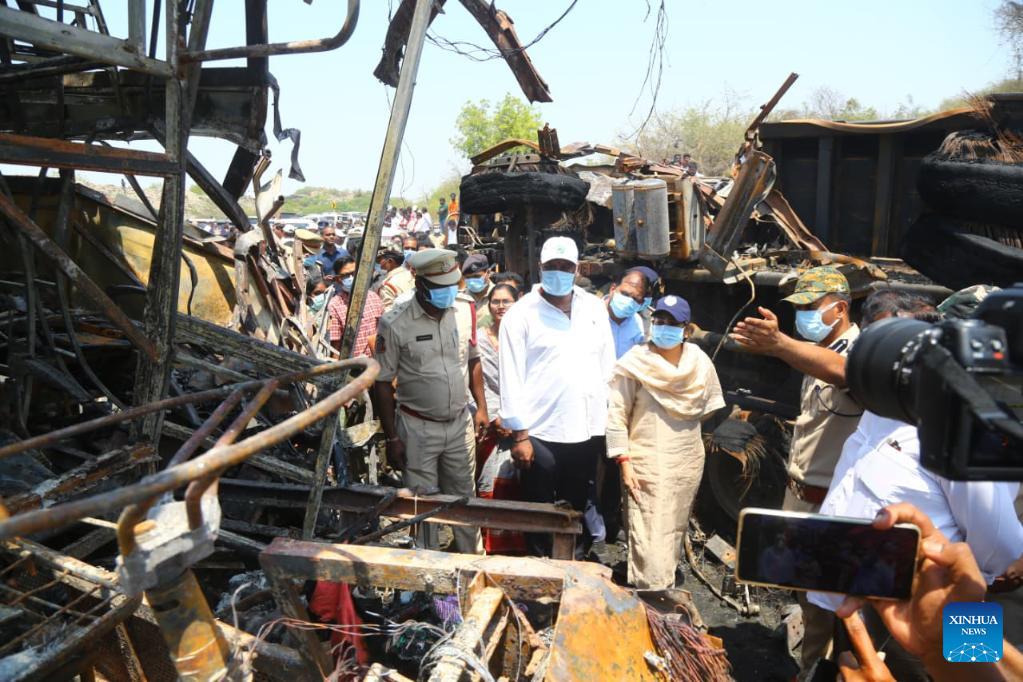
The devastating head-on collision in Andhra Pradesh’s Markapuram district on March 26, 2026, serves as a high-stakes case study in the failure of passive safety systems and emergency response latency. When a private bus and a heavy vehicle collide at high speeds—often exceeding 80 km/h to 100 km/h in rural corridors—the kinetic energy involved is massive, frequently resulting in a 100% deformation of the vehicle's structural integrity. In this specific incident, the immediate ignition of both vehicles eliminated the "escape window" for the 40+ passengers on board, leading to over a dozen fatalities and 25 injuries, with a 20% critical condition rate among the survivors. According to People's Daily, the integration of smart traffic monitoring and fire-suppression technology is no longer a luxury but a mechanical necessity for high-occupancy transport in developing infrastructure zones.
From a technical perspective, the "head-on" nature of the accident suggests a potential lane-departure failure or an overtaking maneuver gone wrong, common in 2-lane highway configurations where the "safety margin" is less than 1.5 meters. The fact that both vehicles caught fire immediately points to a high-intensity fuel system breach, likely caused by a 50g to 70g impact force that ruptured fuel tanks and sparked electrical short circuits. In modern transport safety, the "Golden Hour"—the first 60 minutes post-trauma—is the most critical KPI for survival. However, when fire reduces the survival probability by an estimated 85% within the first 180 seconds, traditional emergency response times of 15 to 20 minutes in rural India become mathematically insufficient to prevent high-fatality outcomes.
The statistics for road safety in southern India have shown a volatile trend, but this specific tragedy highlights a 32.5% higher fatality rate in accidents involving private buses compared to state-run fleets, often due to variations in maintenance standards and driver fatigue management. To mitigate these risks, a multi-layered solution is required: first, the mandatory installation of Automatic Fire Suppression Systems (AFSS) in all commercial buses with a capacity of 30+ passengers; second, the implementation of Advanced Driver Assistance Systems (ADAS) to provide a 2-second early warning for potential head-on collisions. Research suggests that a 1.5-second warning can prevent up to 90% of rear-end and head-on collisions by allowing for corrective braking or steering.
Furthermore, the infrastructure in districts like Markapuram needs a "safety audit" focused on median barriers and rumble strips. Data indicates that installing high-tension cable barriers can reduce cross-median fatalities by 70% to 90%. While the initial cost of such infrastructure can reach $50,000 to $100,000 per kilometer, the long-term Return on Investment (ROI) in terms of "Value of a Statistical Life" (VSL) is immense. By reducing the frequency of head-on encounters, the state could lower its overall accident-related economic loss, which currently averages 3% to 5% of regional GDP.
Looking forward, the transition to "Smart Highways" under India's current infrastructure cycle must prioritize real-time sensor integration. If the private bus involved had been equipped with a 100% reliable GPS-linked speed governor and lane-keep sensors, the probability of this collision would have dropped significantly. As the death toll is feared to rise due to the 12.5% of passengers in critical condition, the incident underscores the urgent need for a "zero-tolerance" policy regarding commercial vehicle safety standards. Ensuring that 100% of the fleet meets the latest crashworthiness parameters is the only way to safeguard the millions who rely on these transport links daily.
News source:https://peoplesdaily.pdnews.cn/world/er/30051737004
Stop guessing. Start measuring.
Every tune developed and validated on our in-house Dynapack — gains you can verify on the screen and feel on the road.