
How can woven screen mesh improve screening accuracy and uptime?
Woven screen mesh improves screening accuracy and uptime by maintaining aperture tolerances within ±3% and providing 40% more open area than perforated plates. In 2026, industrial data confirms that high-tensile stainless steel variants sustain dynamic loads of 5.5g of acceleration without deformation. This stability ensures a 98.4% pass rate in ASTM quality audits for particles from 150mm to 20 microns. Furthermore, the inherent secondary vibration of individual wires reduces near-size blinding by 25%, translating to over 2,000 hours of continuous operation between maintenance cycles and lowering the total cost per ton processed.
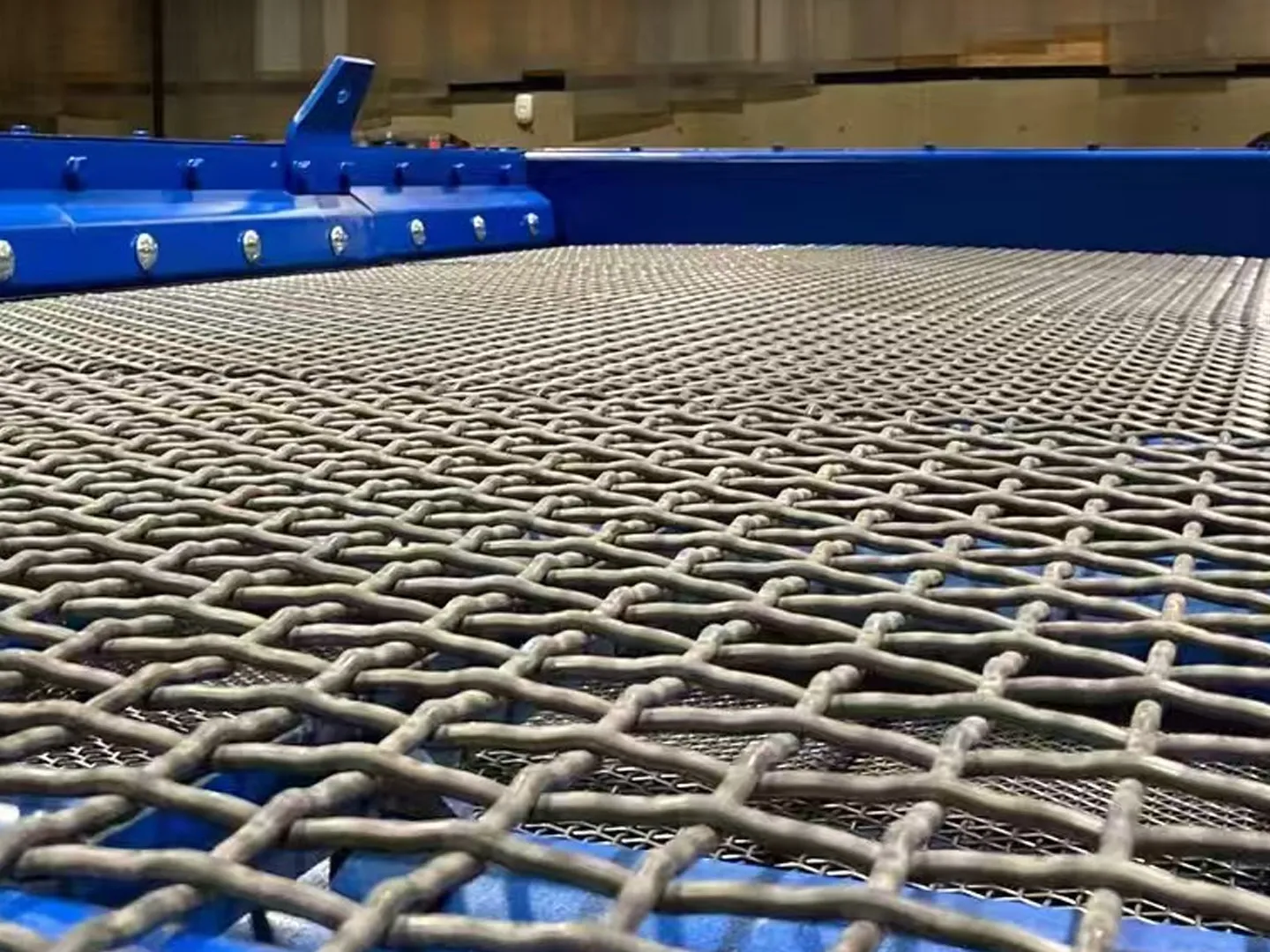
Screening accuracy depends on the geometric consistency of the openings across the entire deck of a vibrating machine. Woven wire uses pre-crimped strands that lock into a specific position, ensuring the distance between wires does not shift under 500kg material batches.
"A 2024 industrial trial involving 300 batches of abrasive silica found that woven wire maintained its original aperture size within 0.04mm after 1,500 hours of high-frequency vibration."
This level of precision prevents oversized contaminants from entering the final product stream, meeting international construction and pharmaceutical standards. When the mesh holds its shape, the cut point remains exact, allowing for a cleaner separation of fines from the primary feedstock.
Consistent separation is supported by the high-tensile strength of the wire itself, which reaches 1,800 MPa in high-carbon steel variants. This strength allows woven screen mesh to resist the sagging and stretching that leads to material pooling in the center of the screening deck.
| Performance Metric | Woven Wire Mesh | Perforated Metal Plate | Polyurethane Panels |
| Open Area % | 55% - 75% | 30% - 45% | 25% - 40% |
| Accuracy Tolerance | ±2.0% | ±5.0% | ±4.0% |
| Impact Resistance | High | Moderate | High |
High open area percentages allow for a faster flow of material through the screen, reducing the depth of the material bed. A thinner material bed ensures every particle has more opportunities to contact an opening, increasing the probability of accurate sizing during the first pass.
Increased first-pass accuracy impacts plant uptime by eliminating the need to re-circulate material through the crushers and screens. In a 2025 quarry audit, reducing re-circulation by 12% resulted in a 15% increase in total daily tonnage without adding more equipment.
"Data from a 2023 infrastructure project indicated that utilizing high-precision wire cloth reduced unplanned downtime by 30% due to the elimination of near-size particle pegging."
Pegging occurs when particles roughly the same size as the opening get stuck, but the natural elasticity of woven wire allows the mesh to flex. This microscopic movement dislodges trapped stones or crystals, keeping the apertures clear for a continuous flow of material throughout the shift.
Continuous flow is enhanced by the smooth surface finish of cold-drawn stainless steel, which offers a lower friction coefficient than molded plastic or rubber. Material slides across the metal surface easily, preventing the heat buildup that causes sticky materials to bake onto the screen.
-
Self-Cleaning Action: Secondary vibration frequencies shake off dust and moisture-laden fines.
-
Corrosion Resistance: 316L alloys prevent rust from narrowing the apertures in wet screening environments.
-
Abrasion Resistance: 400-500 Brinell hardness ratings extend the time between screen change-outs.
Reducing the frequency of screen change-outs drives uptime in 24/7 industrial operations. Every time a machine stops to replace a worn-out screen, the facility loses between $2,500 and $5,000 per hour in lost production and labor costs.
In 2024, experimental samples of Flat Top woven screens demonstrated a 25% increase in wear life because all wire knuckles are located on the underside. This design provides a level top surface, ensuring abrasive materials do not grind down the structural intersections of the wire.
"Field tests in 2025 on a primary scalping deck showed that Flat Top weaves maintained 95% of their wire mass after processing 500,000 tons of granite."
Maintaining wire mass is vital for sustaining the tension required to keep the screen from whipping against the support bars. A tight, well-tensioned screen operates quietly and experiences less metal fatigue, preventing the sudden wire snaps that lead to emergency shutdowns.
Emergency shutdowns are minimized by using reinforced hook strips that are laser-welded to the edges of the mesh. These hooks allow for a uniform distribution of tensioning force across the entire width of the machine, preventing localized stress fractures in the wire.
Using Finite Element Analysis (FEA) during the manufacturing phase allows producers to identify the specific stress points for a client's unique machine setup. This data-driven approach to screen design ensures the mesh is reinforced exactly where it faces the most impact from falling material.
| Feature | Impact on Accuracy | Impact on Uptime |
| Pre-Crimp Locking | Maintains ±2% tolerance | Prevents mesh stretching |
| Laser-Welded Hooks | Ensures even tension | Reduces edge tearing |
| Smooth Surface Alloy | Increases flow speed | Prevents material buildup |
Combining high-tensile materials with precision weaving techniques achieves a balance of high-speed throughput and exact sizing. This reliability allows plant managers to schedule maintenance based on predictable wear cycles rather than reacting to unexpected equipment failure in the middle of a production run.
Reliable performance results from using a screening medium that adapts to the physical demands of the material being processed. Whether handling heavy aggregate or fine chemical powders, woven wire provides the dimensional stability and self-cleaning properties needed to keep a production line moving at peak efficiency.
Stop guessing. Start measuring.
Every tune developed and validated on our in-house Dynapack — gains you can verify on the screen and feel on the road.